


We all know that a big part of the competition in Formula 1 comes from designing the best car on the grid. Constructors’ Championship plays an importance just as much as the driver rankings.
While all the teams set out to be on top and strive to deliver the best car from mechanics to livery, they have one challenge that they have to overtake each and every year: staying up to date. As the time changes, your car has to change with it and now, with their ambitious goals to reach net zero, the challenge is bigger than ever.
We have to keep in mind that one of the main pillars of Formula 1 is car companies that brandish what their vehicles are capable of. With sustainability being an increasing trend and more people seeking to shift to electric cars, competitors of the organisation are forced to think outside of the box in order to put the most sustainable car on the grid. Until 2016, they have undertaken the task of creating a sustainable fuel that will help Formula 1 reduce its emissions and be more eco-friendly.
Back in summer 2022, Formula 1 declared that the series’ transition into 100% sustainable fuels will be completed with the start of the 2026 season. The organisation works closely with fuel specialists from FIA and ARAMCO to engineer a sustainable fuel that works both with racing car engines and your “road cars around the world” as well. With their pledge to go net zero by 2030, F1 is taking fast-paced action when it comes to lowering their environmental impact.
So, let’s get into answering all the questions from what is the current status with racing fuel and how sustainable fuel works to where do feeder series stand and what the future holds.

Image: F1 – 2023 Miami GP
First Steps Have Been Taken in Fuel Revolution
With the start of the 2022 season, F1 cars started to run on E10 fuel. This type of fuel contains up to 10% renewable ethanol which helps reduce the carbon released by combustion. Ethanol is an alcohol-based fuel derived from various plant sources such as sugarcane, grains, and their respective by-products.
Despite the shift being only 10% of the full tank, it came with its own controversies and engineering challenges back in the day. Some climate activists were concerned that the amount of farmland that is needed to grow the plant sources for ethanol and all emissions tied to it might be a greater risk than using regular fuel. Others were more troubled by the quality of the ethanol that started to be used in motorsports, to which F1’s Chief Technical Officer Pat Symonds replied “There are lots of different types of ethanol, which vary in quality, but this is a true green ethanol – so fully sustainable.”
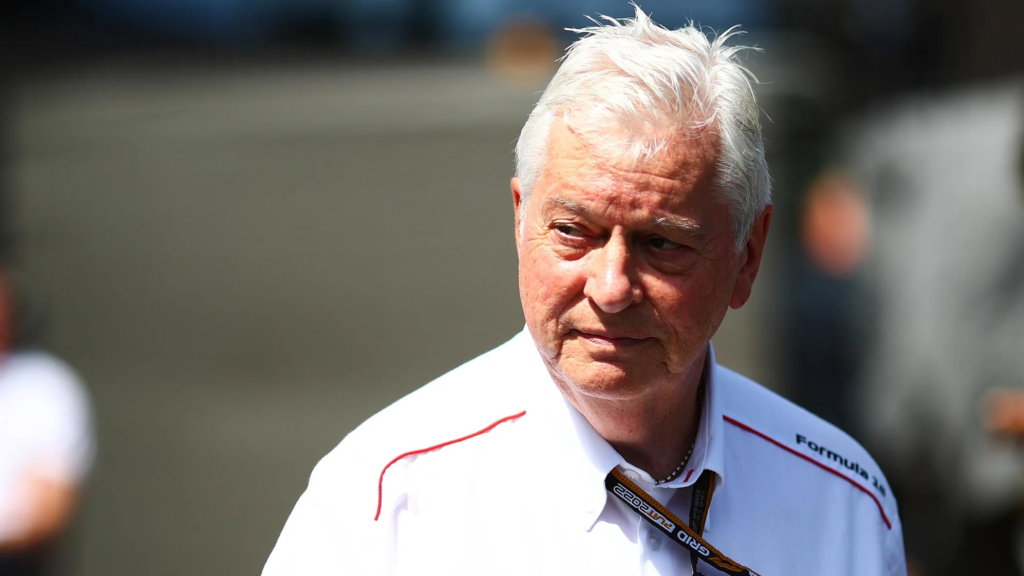
Image: F1 Pat Symonds
E10 is compatible with almost all vehicles that run on petrol which includes racing cars as well. Yet, the significant change in the power unit came with the need to alter the car accordingly.
Mercedes High Performance Powertrains’ Managing Director at the time, Hywel Thomas, affirmed this by saying “The change this year to go to the E10 [fuel] is probably the largest regulation change we have had since 2014. So, it was a sizable undertaking to make sure that we really developed that fuel and… shouldn’t be underestimated how much work that took.”
When all of this is considered, a complete transition into 100% sustainable fuel in just a little over 3 years may sound too ambitious. But, ambition is what drives this sport.
How to Reach 100% Sustainable Fuel
There are still unknowns about the new generation of fuel that are yet to be clarified. But no worries, what we have seen so far has been an optimistic glimpse into the sustainable future of motorsports. By setting a competition with clear objectives, such as the development of a sustainable fuel source, manufacturers will be incentivised to invest heavily in research and development. This could lead to significant advancements that would have positive implications for society as a whole.
Pat Symonds explains, “This is a very, very new technology and there are many different ways of producing the fuels and no one is yet sure exactly which is the best way. So we have written the rules very carefully to try and promote the competition to produce fuels in different manners, and yet at the same time not produce a fuel that will be a runaway for whoever does it best.”
Formula 1 is working on an E fuel with a neutral carbon cycle. This means that when the fuel is used in an internal combustion engine, the amount of carbon dioxide released into the atmosphere is equal to the amount of carbon dioxide used to create it. Therefore, no additional carbon dioxide will be added to the atmosphere from using this fuel. In simpler terms, they take the CO2 that is already out in the atmosphere, use it to run the car and release it back to the atmosphere.
Although sustainable fuels not releasing carbon dioxide as a byproduct is a myth, it is true that at the end of the process there is no net CO2 emitted. ARAMCO will be operating from plants in Saudi Arabia and Spain by taking carbon out of the air and turning it into sustainable fuel. They call this technology ‘carbon capturing’. The challenge of capturing carbon dioxide from the air is still considerable, however, ARAMCO and F1 are devoting a lot of resources to developing direct-air capture technology.
E fuel is a playground that lets the people in the industry get more creative with their works as they are in a cycle of trial and error until they produce a sustainable fuel that will be the perfect match for a racing car. F1 and ARAMCO has been running tests on numerous blends in single cylinder Formula 1 power units to fully explore the possibilities that come with E fuel.
Rumours are circulating that Porsche and Audi could become engine manufacturers in the push for sustainable fuels. Porsche has shown interest in synthetic fuel for road cars, with the Vice-President of Porsche Motorsport saying that Porsche would consider joining F1 if they committed to sustainable fuels. If both parties come together to create sustainable fuels, this could be a significant turning point for the future of the internal combustion engine.
Clean, Green and Accessible Fuel
Formula 1 is known to pioneer game changing technologies within the motorsports industry, but their impact is far more greater than that. The new fuel they are committed to develop will be made suitable for road cars. The aim is to engineer it in a way that doesn’t bring the need to change the engines of our everyday vehicles.
“If we drop a fuel which has much less impact on the environment into those cars, it’s a positive change and we will be sending a strong message that that is a feasible way to go. All the oil companies that work in F1 are all committed to that. It will be a fantastic achievement and a fantastic message to the world that there are other solutions as well.” said Managing Director, Motorsports, Ross Brawn.
The sustainable fuel engineered by Formula 1 and their partners may be expensive when initially introduced, however the prices are bound to come down over time. This is due to the technology’s learning curve which has been seen with wind and solar energy in the past. It is important to note that this fuel runs on hydrogen from renewable sources and carbon serves as a carrier of low-energy, making it more cost efficient than traditional oils such as Brent crude oil. As a result, what was once an expensive fuel will become much more reasonable and practical in its price point.

Image: Scuderia Ferrari
Sustainable Fuel in Feeder Series
Towards their “ambitious target” of powering themselves with a sustainable fuel that is made almost 100% with carbon capturing by 2027, Formula 2 and Formula 3 started using a fuel that consists of 55% bio sourced materials.
F2 and F3 have more stringent regulations in place when sourcing carbon for their fuel compared to Formula 1. In 2027, F2 and F3 will only utilise direct-air carbon capture, which involves taking the fuel directly from the atmosphere and transforming it into hydrocarbon molecules. On the other hand, Formula 1’s 2026 regulations permits suppliers to source the required carbon from a variety of sources such as non-food bio sources, municipal waste or direct-air carbon capture.
The 55% sustainable fuel that they have this year will be used in 2024 season too, then the series will produce the sustainable component in the fuel entirely by using carbon capture. After two seasons with 55% carbon captured fuel, in 2027, it is pledged to be produced almost 100% by carbon capturing.

Image: FIA
Fuel Is Not the Only Issue
Although F1’s efforts towards sustainability are praiseworthy, it is important to note that the carbon emission caused by racing cars is just a tiny drop in the ocean of emission caused by the organisation.
“When you look at the total carbon footprint in F1 as a sport, our carbon footprint is just over a quarter of a million tonnes. And of that, the amount that’s represented by running our cars around the track is 0.7%. It really is very little indeed.” explained Symond.
This leaves us with the question of, with all the manufacturing and logistics considered, whether we can call the end product sustainable or carbon neutral. Symond argues that the development of a fuel which will be made available for public use is a greater achievement than tackling intra-organisational logistics.
“We try and take a much wider view. And what I think we have in developing a sustainable fuel and putting it in our race cars is an enormous multiplier effect. The 2 billion vehicles that are out there could use this fuel, and then the 400,000 people driving to the US Grand Prix isn’t a problem.” he said.
At the end of the day, Formula 1 is putting in the necessary effort and resources to make a switch to 100% sustainable fuel by 2026. It is evident that this shift will not only reduce their environmental impact but also inspire other stakeholders to go green, leading to a better future for everyone. This transition comes with its own challenges such as the need for new car designs and additional research on direct-air capture technologies.
Yet, it still remains an ambitious target that can be achieved if all parties involved work together towards this shared goal of sustainability.
 Author: Öykü Ceylan

More from Editor Picks

What Are The Best Driving Films Ever Made?
What Are The Best Driving Films Ever Made? From legendary motorsport epics to unforgettable car chases and cult classics, these are …

GWM Poer 300 Review
The GWM Poer 300 behemoth is a true contender for the pick-up class. Introduction The influx of Chinese car manufacturers to both …

GWM Haval Jolion Pro Review
Is the GWM Haval Jolion Pro good enough to be the cheap and cheerful kid on the block? Introduction Unlike so many …


