


In Conversation with Francesca Milani
There are a plethora of roles within the world of motorsport. While across a typical race weekend, you’ll likely see the drivers, mechanics, race strategists and team bosses, you probably won’t see most of the other people that work tirelessly behind the scenes in order to bring everything together and make it all look seamless.
This means that when it comes to these individuals, you’ve probably not heard many of their stories – but trust me, they’re at least as interesting (if not sometimes more so) than the stories we hear about at the forefront of motorsport.
Francesca Milani is one of these people with an engrossing story about how she became involved in motorsport and how that has evolved over the years. Like most of us reading this, Francesca first fell in love with motorsport thanks to a combination of using it to spend time with her Dad and supporting both Ferrari and Michael Schumacher.
While her path from that moment to her working in the racing world wasn’t an obvious one, it does come across as something that was inevitable and once it had taken hold of her, it wasn’t letting go. Francesca got involved with the Formula Student programme at university and from there, began working for the Race UP Team in a number of different roles and has ambitions she wants to fulfil in motorsport in the future too.
Francesca and I chatted about all this and more when we caught up recently in what turned into a fascinating conversation that you can’t help but get pulled into.
I hope you enjoy it as much as I did.
What first got you interested in Motorsport?
When I was just a child, I was allowed to watch very little television. However, I remember that on Sundays, my Dad always watched the Grand Prix and I, at 4 years old, did not really understand a lot about it, except that we supported Schumacher and then Ferrari.
I could not see my Dad so often in that period because he worked a lot so for me watching these little cars go round and compete to see who gets there first was a great way to spend time with my Dad.
I also remember that one of the first gifts I received, in addition to the classic Barbies, was a toy car track, like the Polistil one. It was a modular circuit, which could be assembled as desired and then the toy cars were made to whiz by. The real game for me was not racing with toy cars but trying to reproduce the circuits of the Grand Prix and making the beautiful little red car go, which in my mind represented the Ferrari.
Over time, however, this sort of affection turned into interest, and I started asking myself a thousand questions about how things work, even the smallest ones about motors, cars, aerodynamics, strategies and so on. Now I know more of this wonderful, complicated world of motorsport and I can say that I am totally fascinated by it.
You had some non-motorsport related jobs before you got into this world, what made you want to switch?
During my university studies I always wanted to get busy, roll up my sleeves and enrich my personal background. I’m not really a person who likes to sit idle, so I make the most of my time by trying to give added value.
I must say, however, at a certain point it wasn’t enough for me anymore. I wanted to do even better and I wanted to bring a passion that I had developed on a superficial level to something that could be something more, maybe a job. For this reason, I enrolled in the Formula Student experience and this puts you to the test and gives you an immense wealth of knowledge.
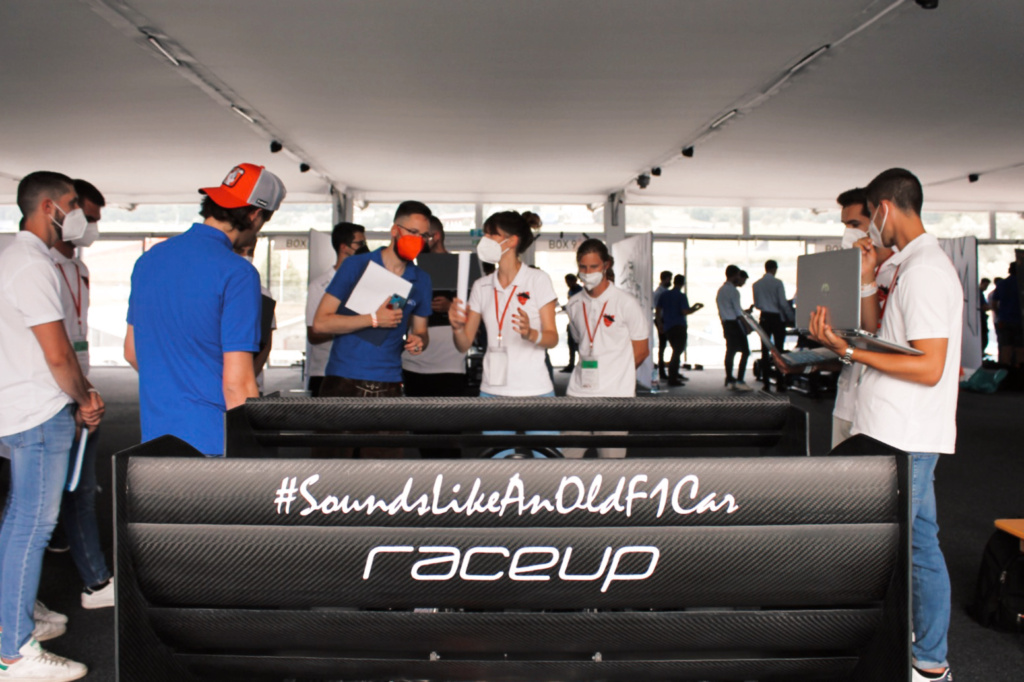
You started working for the Race UP Team as a Business & Marketing Operative Member – tell me about this.
Just before the applications closed, I went out for a coffee with one of my best friends and he told me he had applied for a position in the Formula Student team. I had heard about it before, but as a management engineer, I thought I could not fit that much. Then, I realised that there was a huge opportunity for me too and so I applied.
I did not receive the answer immediately after the interview. In fact, initially I thought I hadn’t been chosen. I did not have many skills. I was in the third year of my bachelor degree, but I really wanted to do it, to learn and to get involved. Then, however, the email arrived telling me that I had been chosen. I was really happy, I felt up to the task.
The great thing about the team was that everyone is driven by the desire to do more, to achieve goals and to excel. So there wasn’t an economic reason in itself, but this common sense of wanting to give our best was what led us to obtain results.
Anyway, going back to my beginning, it was quite complicated, because the first few months were remote (Covid 19 was still around). You understand that working with people you don’t know on a totally new project is difficult, especially getting aligned with them. This is even more so if one of the main goals of the work is to produce a comprehensive business plan with a Formula Student car as its subject, which we couldn’t see due to Covid restrictions. But then, with the easing of security measures, we started seeing each other more, working together, interacting with the group, sharing ideas and putting our hearts into it more and more. What I feel I brought home after that first year is definitely teamwork, problem management in general and above all making the desire to do something concrete.
How did this evolve into you eventually becoming a Team Advisor?
As I said before, I believe that the desire to do and my character’s predisposition to leadership were the key to becoming head of department. I would define the second year as totally challenging and exhausting, because I went from an almost operational and functional position to a management one. Together with the two team leaders (one for the electric car and other for the combustion car) we felt responsible for the team, also because we – young students between 20 and 25 years old – had free rein to do what was necessary to succeed, earn the place and the respect of the other teams. By this, I mean finding the sponsors, the funding, the equipment, the components, the people…
Perhaps, it is precisely this awareness that led us to obtain the results. We were HR, because choosing the right people is not trivial, building a car of that type requires know-how and above all a great desire to try, study and learn. We were also project managers. We had a project, we had a deadline and we had to meet the timing.We were accountants, we absolutely had to come back with the funds, plan a budget and try to stick to it as much as possible. We were also marketers, precisely to attract stakeholders who believed in us and supported us in what we wanted to do.
None of us knew how to manage such a particular and complex situation, we learned it, always trying to push ourselves to the maximum, being patient and showing ourselves all 100% committed to what we were doing, with consistency and sometimes even working until late at night.
At the end of my second year, after having obtained enormous satisfaction, I left the role, passing it on to a fantastic person who, given the interpersonal and tangible results of the team, was able to keep the reputation of the team and the role high.. And so I became a team advisor.
What does this role entail?
The team advisor is a figure that embodies the know-how acquired during the previous two years of experience in the team. A figure of this type is important because he or she acts from behind, supporting the choices and advising a good path to those who are still part of the team. It is a choice, but I believe that once you enter the team and, in any case, sacrifice many things for a more or less long period, the bond remains. It remains because you know you have been part of it and brought your contribution that then remains also in the subsequent models that will be created. I firmly believe that the two models that we have today carry within them the name of all the people who have been part of the team up to now. And so it will be for the subsequent models.
Anyway, among us, those who are team advisors are called “grandfather” precisely to recall the concept of family that is created around this experience. And it is nice to see how those who believed in it are always interested in helping, without obviously receiving anything in return.
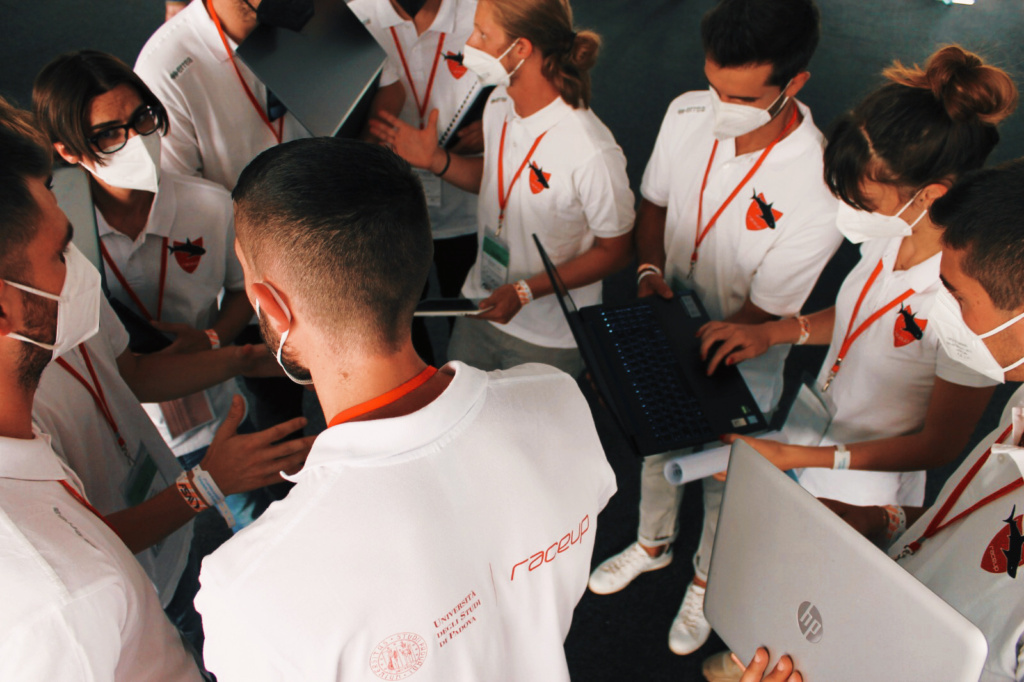
What do you most enjoy about your role and what is the most challenging part of it?
The best part was definitely the learning. I can’t say how many things I’ve learned in two years, I mean both techniques and soft skills. Above all, working with people who are at least as eager as you to do it, for no selfish reason other than passion, is stimulating. And they are all ready to explain to you, to show you things that maybe aren’t part of your personal background, but if you just show interest they can become so. I realise that when I talk about it my eyes still shine. Race up trained me, changed me and certainly made me responsible, offering me a competitive advantage for the person I am, as well as for my skills.
Other challenging characteristics of this experience, peculiarity which make me understand that this experience is not for everyone, are sacrifice, perseverance and prioritisation. Balancing university, RaceUp and private life was difficult for everyone, for example I know of someone who took only one exam in the whole year. It’s always hard to give up on something, to find the perfect balance between everything and to give the right weight at the right time to things, without having emotional breakdowns or being too stressed. So, I think that was the hardest part, especially when you find yourself in a directorial role, where everyone refers to you.
Do you have any ambitions for the future in the world of racing?
An ambitious plan would definitely be working in the racing world, because I believe it is one of the sectors characterised by strong energy, dynamism and overcoming limits. Furthermore, since it has always been a passion of mine, I believe that combining work with a passion is truly the dream of those who, like me, are highly ambitious and would give anything to do something they feel part of.
Again, I believe that there is a strong sense of innovation and avant-garde in this world, precisely because we try to optimise performance as much as possible. Of course I do not presume to know how it actually works, but I believe that an experience like mine can be a good starting point to enter this beautiful world.
What advice would you have for others that are looking to get into motorsport but don’t know where to start?
I believe that motorsport is a complex, intricate and highly competitive reality, but still accessible to everyone. In my modest opinion, starting from an experience like Formula Student is an excellent way to understand if you actually want to get involved. This is because I firmly believe that motorsport requires enormous passion. There are many jobs that can be done out of boredom, because they are the only choice or because someone settles for less, but this dynamic and challenging work is not made for those who do not have a huge desire to do more. As I mentioned before, in my own small way I have understood that enormous energy and will to do what is required, but if I had not been part of the team, I probably would not have understood all this.
Beyond the remunerative part, in a niche of this type, what a person gives in terms of commitment, time and sacrifice, is not rewarded with what he receives, unless it is satisfaction. However, I believe that satisfaction, to be such, comes from something we believe in or are passionate about.
Away from motorsport, you worked on a Carbon Capture and Storage Project in 2023 – tell me about this.
Last year, during my first year of my Master’s Degree, I attended a course on renewable energy. The request of this course was to present a case, a sort of business plan, that dealt with a topic addressed during the year or in any case strongly inherent to today’s problems. Within the work group, there was another guy who, like me, had worked in the Formula Student program and we had both presented during the technical competitions a study on the impact in terms of CO2 on the production and construction of the cars. For this reason, we were both very close to the topic and already knew something about it; plus, we were very aligned on how to carry out the project in terms of timing, work organisation, content, research, graphics…
We therefore decided to deal with the topic of CO2 capture and storage, also proposing practical examples or possible solutions and applications. The work was particularly onerous but very detailed and I can guarantee that in any case, given the commitment and interest, it gave its results.
If you could make any three wishes come true, what would they be?
Beyond the fact that I am grateful for everything I have now, I am lucky and happy, first of all I would like my work to be a passion of mine. I would like to work in an environment that satisfies me, that is not only a means to live well, but is also an integral part of my life. In fact, I am of the idea of ”living to work” rather than “working to live”; that’s precisely because, being a large portion of my time, I would really like to do a dynamic, challenging, satisfying job, in which I use my head and in which I can make a difference.
Secondly, I would like to always be able to have Ale close by. Ale is the person who accompanied me on this journey characterised by so many changes. In my opinion, in order to be happy it is important to be able to share the good, difficult or important decision moments with a person and have a comparison. Obviously everyone lives for themselves, but I truly wish everyone to have a person like Ale in their life.
Last wish: An SF90 stradale, possibly red, but mainly because of the back part, which is made up of glass.
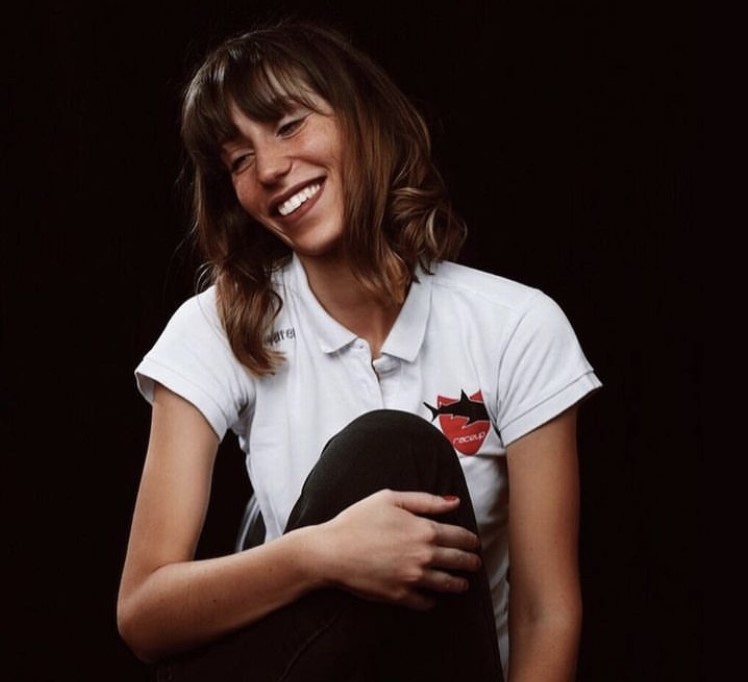
Thank You very much to Francesca for taking the time to chat and best of luck in all of your future motorsport endeavours.
 Author: Thiemo Albers-Daly

More from Editor Picks

What Are The Best Driving Films Ever Made?
What Are The Best Driving Films Ever Made? From legendary motorsport epics to unforgettable car chases and cult classics, these are …

GWM Poer 300 Review
The GWM Poer 300 behemoth is a true contender for the pick-up class. Introduction The influx of Chinese car manufacturers to both …

GWM Haval Jolion Pro Review
Is the GWM Haval Jolion Pro good enough to be the cheap and cheerful kid on the block? Introduction Unlike so many …


