


Does electricity give the Genesis GV70 a boost over its more established rivals?
Genesis has had one major drawback that is truly stopping them from becoming a big-time player in the luxury sector against the likes of Mercedes, BMW and Audi. Something that so many other brands seem to lean on as a source of outright pride. Something that just frustrates and creates that slightly irritation that lives rent free in the back of your head whilst driving.
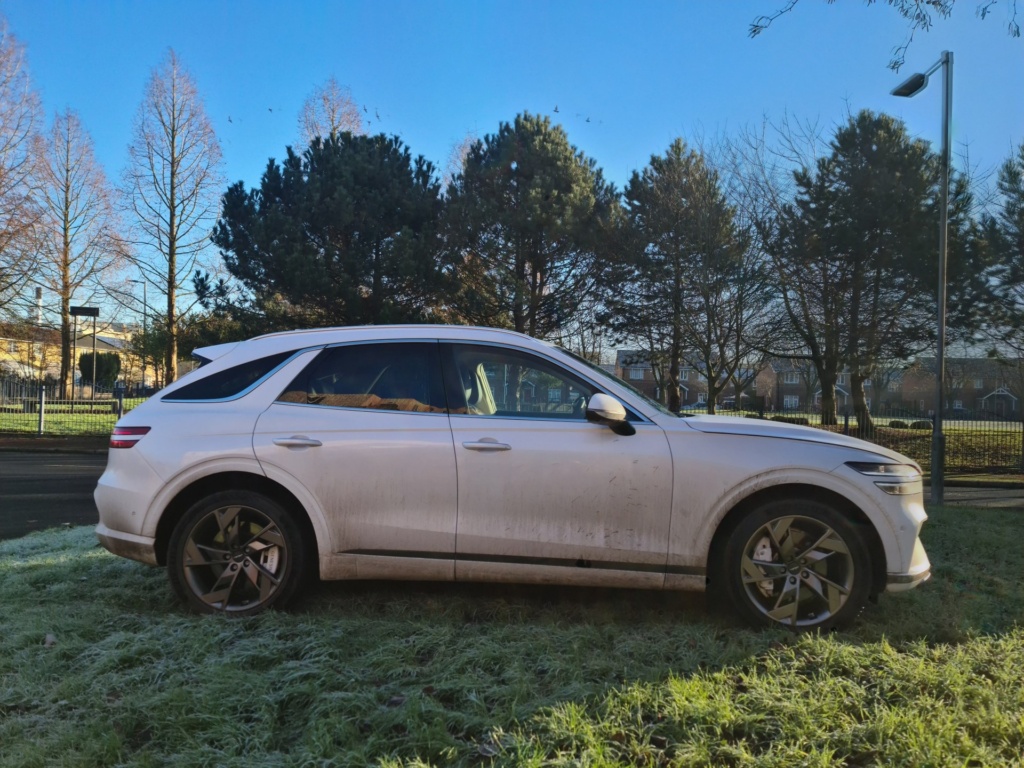
That problem? The engines. The petrol’s are merely OK with respectable enough power, but they have a coarse sound when pushed and poor fuel economy that detract from their long-distance cruiser capabilities. The less said about the diesels the better. The only really good engine was the unfortunately now defunct 3.0L turbo 6-cylinder diesel found in the GV 80. It was always a shame to drive something so well built, so comfortable and luxurious that it outclassed its rivals in many regards and yet there was always this slightly disappointing niggle. This time however, Genesis has a trick up their sleeve.
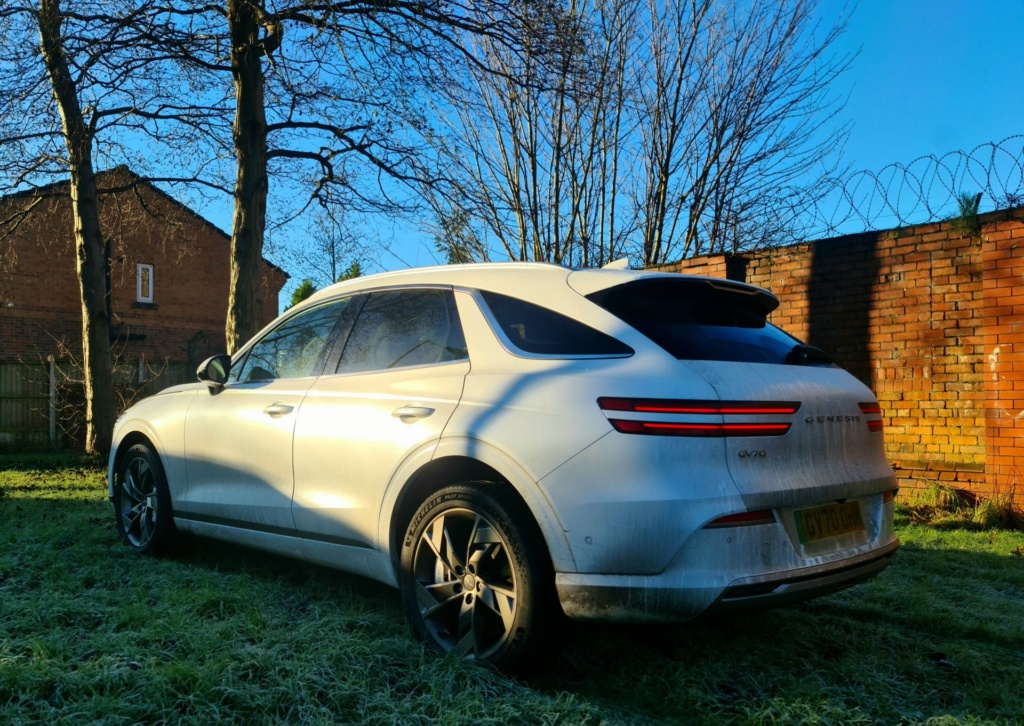
This GV70 is now powered by the dark art of batteries. The GV70 was always a particularly good vehicle. It was well insulated and comfortable, so surely removing the unwanted noise of an ICE, adding a huge amount more power and increasing the waftability can only be a good thing, right? The answer is wholeheartedly a great big yes, with the exception being so long as you don’t do big miles regularly. The performance upgrade is very much the first thing you notice. The petrol GV70 is not slow, but nor does it really blow you away with its 300bhp and a 0-62 mph time of 6.1 seconds.
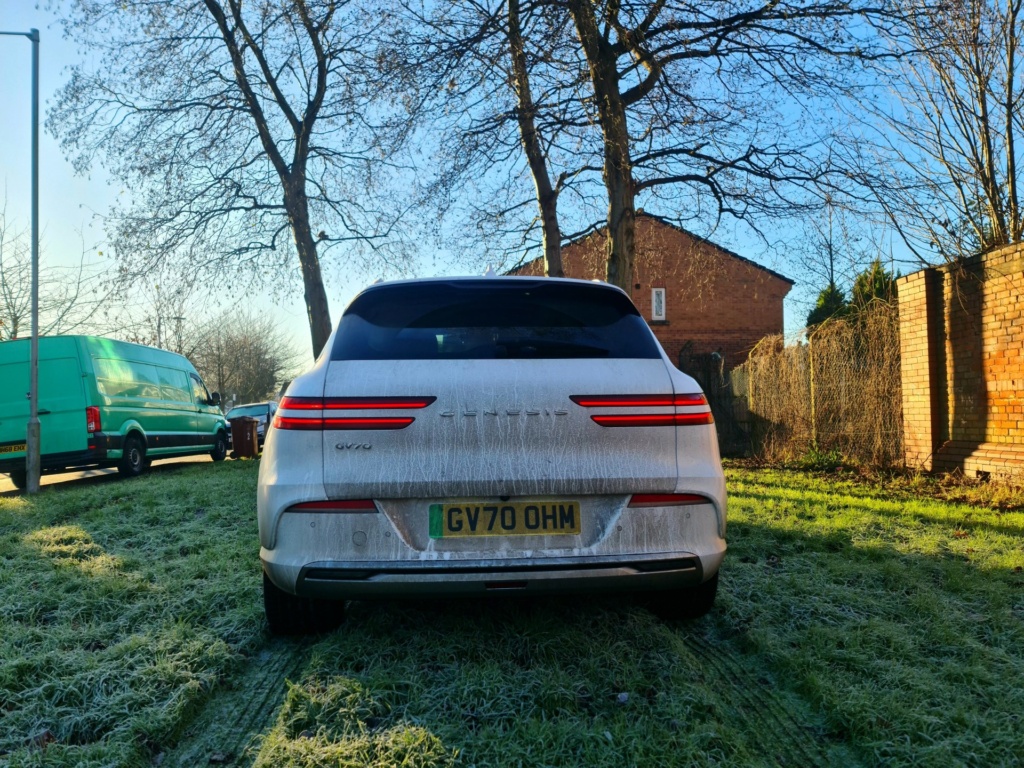
Genesis have obviously gone away, had a good long think and a tinker, and have come back with a vehicle that produces 483bhp and hits 62 mph from a standstill in 4.1 seconds. That’s not just an upgrade, that’s a completely different class of speed. The power output headline figure however is not the complete story. As with so many electric vehicles these days you need to put it into a special mode to unlock the full capabilities of the battery/motor combination.
In Genesis language it is called ‘Boost Mode’. To activate it there’s a large button in the bottom spoke of the steering wheel. In a full launch situation, it certainly generates enough drama with the display going red and showing graphics that look like you’re about to enter hyperspace. The seats also tighten around with the side bolsters hugging you snuggly in place, which never gets old. In Normal mode however you ‘only’ get 429bhp.
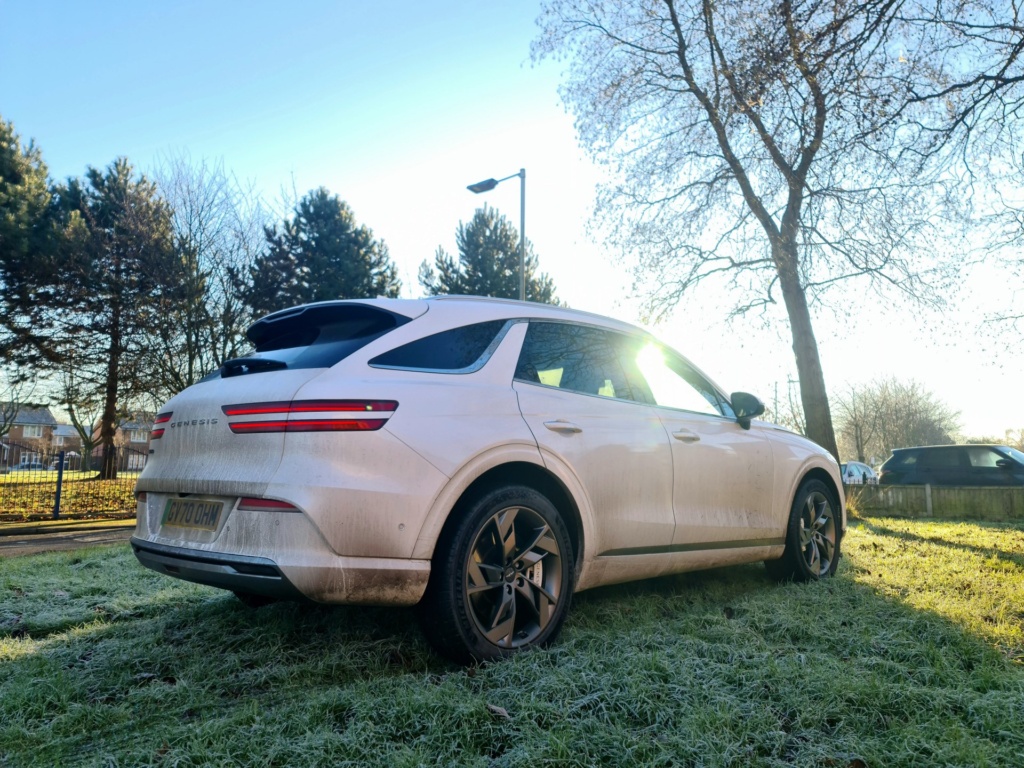
That’s still more than enough to push your head back and overtake almost anything, at any speed, in what is seemingly the blink of an eye. The all-wheel drive system does its best to put all that power to the ground. Most of the time it does a respectable job, however as the GV70 electrified is quite a heavy vehicle, 2.3 tonnes, when you do a full Boost launch, you can feel the front wheels struggling for traction. remarkably quiet. Adding the excellent 15 speaker uprated Lexicon sound system means you also get noise cancelling technology as well. Both options are highly recommended for a vehicle of this type if motorway work is on your regular daily route.
The other issue with all that power is range. As with all EVs, the more motors you have, and the more driven wheels there are the lower the range. Officially the GV70 electrified will do 283 miles but tick the option for the 20-inch wheels and that is reduced to 276 miles. These numbers are on paper are very much on par with what the BMW iX3 will do, so really, it’s pretty much bang on target. In pleasant weather the real-world range will be closer to 230 miles and if you use it in freezing conditions, less than 200 miles is more than likely.
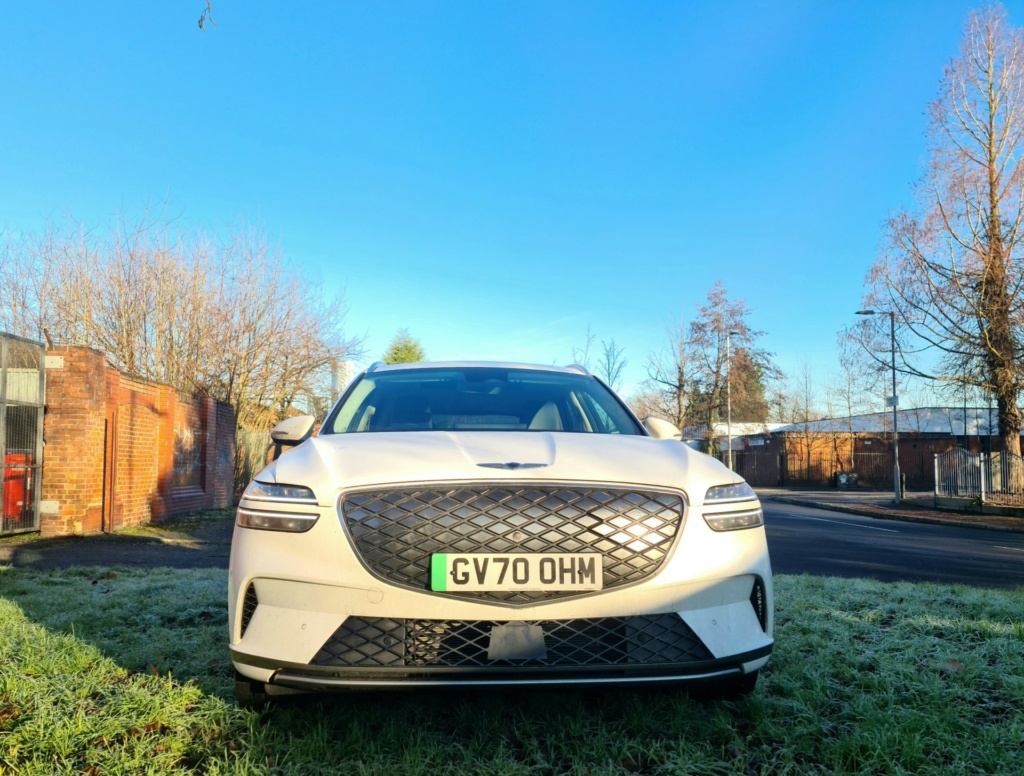
During the week we had the vehicle it was the middle of a particularly cold patch of it sitting around -5°C. When we charged it to 100%, the range said 189 miles. That was in eco mode and with the driver only air-con mode on. In Comfort mode with the full air con working front and back seats, that fell to 175 miles. Not great for a vehicle that without options cost £64,300, and in the spec as tested came to an eye watering £79,565. In its defence, no EVs perform well in freezing temperatures so there is no reason to assume that any of its rivals would have performed any better.
Handling wise, it performs admirably. It feels a little firmer than the petrol versions, but that will be simply due to suspension tuning to control the almost 500kg weight disadvantage. It is certainly a comfortable driving experience and glides over all but the worst of surfaces. The rapport you build with it is similar to almost all other Genesis models. Be smooth, lean into the luxury and allow the silent powerhouse to glide gracefully down the road, and it excels.
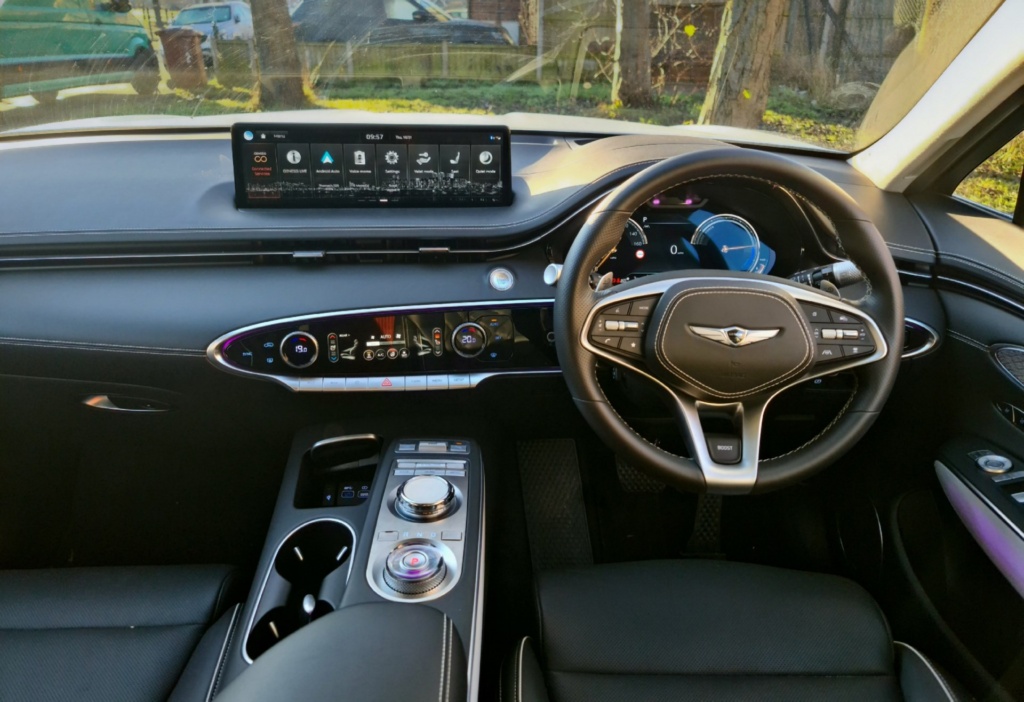
The accurate steering, well-judged throttle pedal and regen system combined with enormous amounts of grip make getting from A to B one of the most enjoyable and cosseting experiences of any vehicle in its, or even the class above. Outright body control isn’t quite as good as a BMW iX3, but leagues ahead of its more real competitor, the Tesla Model Y. Overall refinement is exceptional with very little road, tyre or wind noise and with the added second row Comfort pack you get a winning combination of standard acoustic glass and laminated side windows along with optioned laminated rear windows, make it
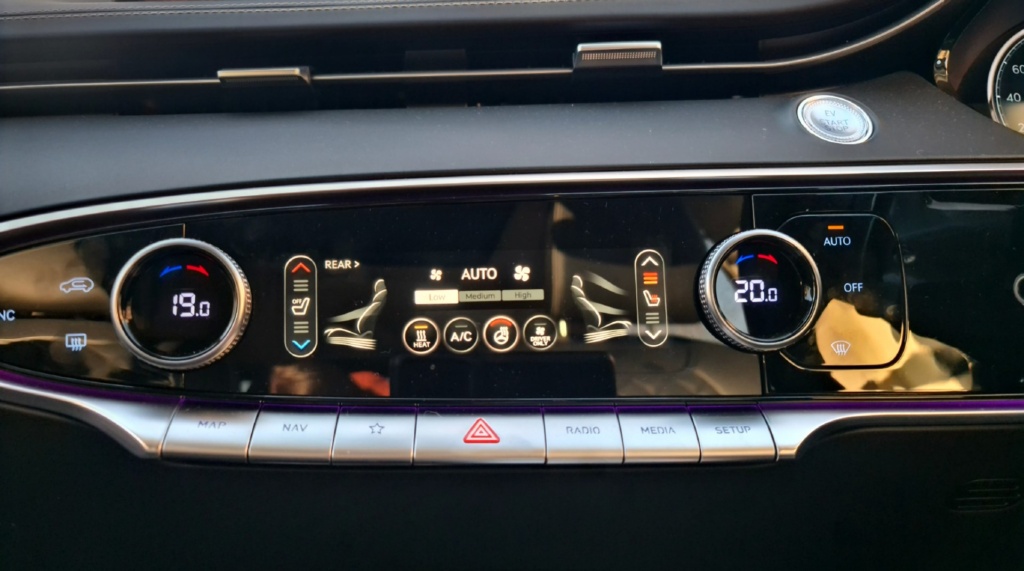
The interior of the GV70 Electrified is like every other Genesis. Beautiful. The driving position it is easy to get comfortable thanks to a huge amount of adjustability from the fully electric seats and reach and rake steering wheel. There is adjustable lumbar support as standard, and if you upgrade to the Front Comfort Seat pack you even get massaging seats for both front seats. The massaging function even automatically turns on during long trips to help your seating position and blood flow.
The only little niggle with the front seats is they don’t go low enough. Unlike the Genesis GV60, this is not a ground up EV, so there are some compromises built in that can’t be changed. The Jag I-Pace and BMW iX3 both give you the ability to sit lower. The GV70 Electrified still gives you an excellent view over the bonnet thanks to what feels like a surprising amount of glass in a modern car and small A-pillars. Visibility all around is good with few large blind spots and if you opt for the Innovation Pack you get a blind spot monitoring system as well as the exceptionally excellent cameras on the wing mirrors that show on the drivers display what is in your blind spot when you indicate. Still one of the best features on any vehicle on the market.
Parking is also a doddle as you get front and rear parking sensors as well as a rear parking camera standard. Another immensely helpful feature is the ability to use the cameras on the wing mirrors to show the front or rear wheels specifically so you can get as close to the curb as possible without the worry of damaging the beautiful alloys. The standard drivers display is a nice combination of analogue and digital, but with the Innovation Pack you get a 12.3 inch fully digital display with 3D effect should you want it.
There are three modes for the 3D effect. As with the GV60 tested recently, the maximum mode is uncomfortable for your eyes, when it’s switched off it looks a little dull but put in the middle mode it is a lovely balance between the two. One of the most useful things that any driver has in a modern vehicle is the heads-up display and the one in the GV 70 is no different. It is clear, bright and has a useful level of personalisation.
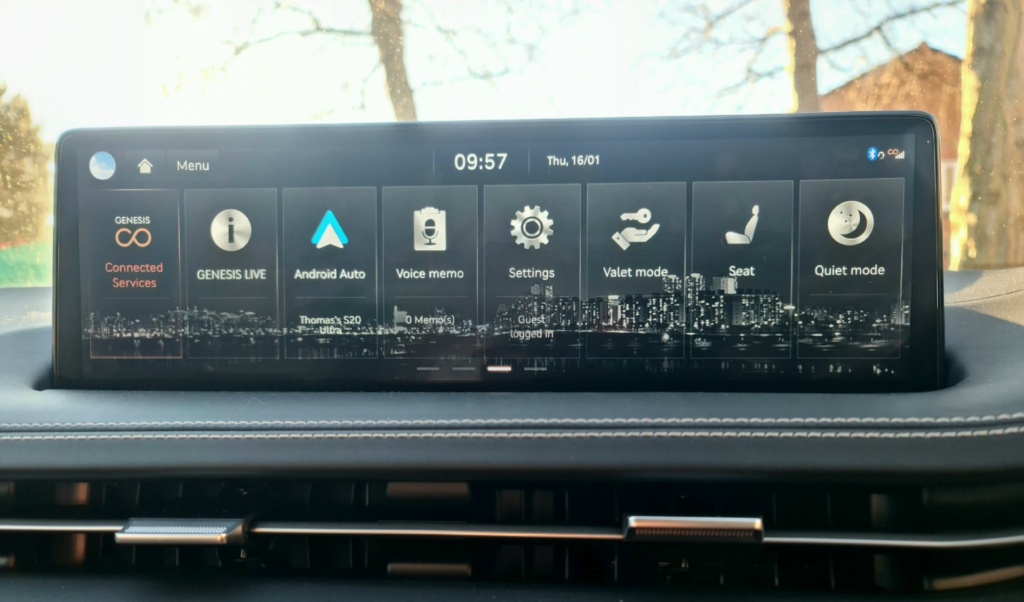
The central 14.5-inch infotainment screen is the same as found in all Genesis models. It’s still one of the best systems on the market. As is the Genesis way, it is a touch screen but is a bit of a stretch to reach when driving, so it makes more sense to use the central iDrive like rotary controller. Not only is it much safer, but significantly easier when on the move. You get wireless Android Auto and Apple CarPlay as standard, both of which work faultlessly. The rest of the interior feels impeccably well built. Easily on par with Audi or Lexus. There are almost no cheap feeling materials anywhere in the cabin. There is a load of head and knee room in the front, and the rear seats are good if not brilliant.
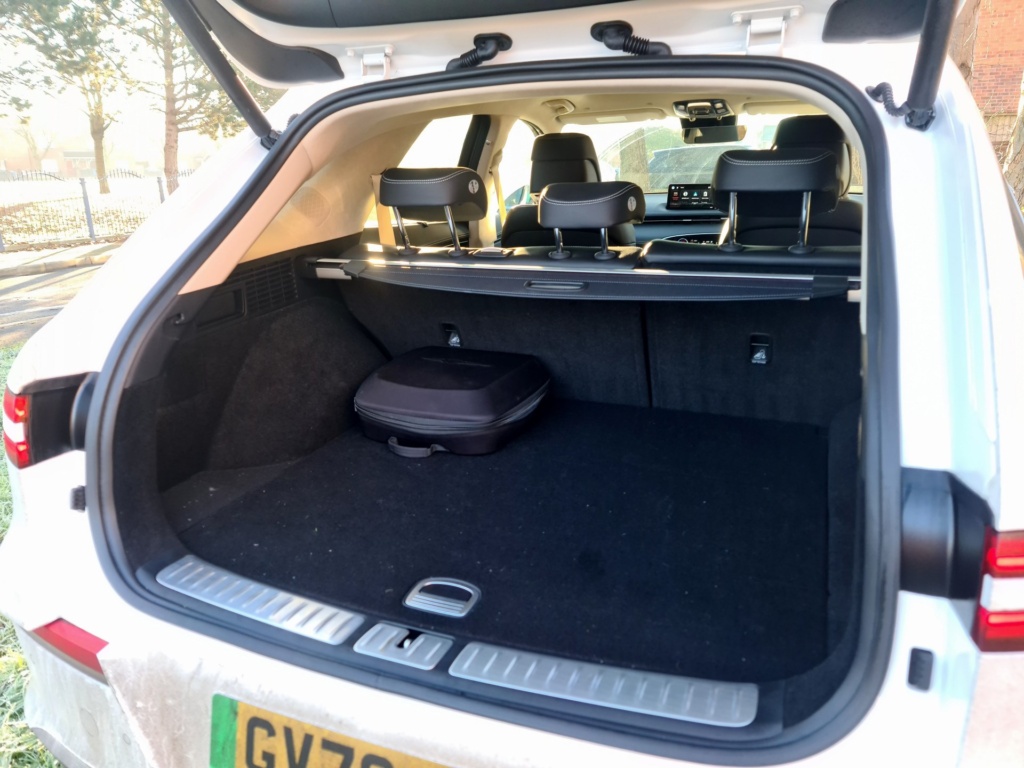
Anyone over six-foot will not be hugely comfortable sat in the middle seat, and it certainly can’t compete with the rear space of a Tesla Model Y. The Compromise of a not ground-up EV. The rear seats do however recline which improves long distance comfort for passengers. The boot is a respectable, if not huge 503 litres. That’s 37 litres smaller than the combustion versions. It is around the same as a BMW iX3, but hugely smaller than the Tesla Model Y.
The GV70 has a tiny 20 litre frunk, which is 20 litres larger than the non-existent one in the iX3, but almost 100 litres smaller than the Tesla’s. The biggest gripe that we have with the boot is that while the charging cables come in a beautifully made branded bag with Velcro on the bottom to stop it sliding around, there’s no under-floor storage for it to go, so it takes up quite a sizeable portion of the boot.
The GV 70 Electrified is, at its heart, a brilliant vehicle. It’s fast, comfortable, looks great and charges very quickly. It has exceptional build quality and tech to rival the best in class. It is a vehicle, if you absolutely need one from this class, that should be right at the top of your list. Certainly, above anything that Mercedes or Audi can bring to the table. The only worry is the brand is not quite established enough just yet to overcome the badge snobbery that so many buyers seem to have. Still, if this is just the beginning, we are excited to see what is to come.
 Author: Tom Edwards

More from Editor Picks

What Are The Best Driving Films Ever Made?
What Are The Best Driving Films Ever Made? From legendary motorsport epics to unforgettable car chases and cult classics, these are …

GWM Poer 300 Review
The GWM Poer 300 behemoth is a true contender for the pick-up class. Introduction The influx of Chinese car manufacturers to both …

GWM Haval Jolion Pro Review
Is the GWM Haval Jolion Pro good enough to be the cheap and cheerful kid on the block? Introduction Unlike so many …


