


Formula 1 teams are facing all-new technical challenges this season, with innovative solutions required to gain a competitive advantage over rivals
However, the eagle-eyed of those watching the 2022 F1 cars take to the track in the first few races of the season may have spotted some interesting changes to the cars’ liveries.
Several teams have made the bold decision to remove paint from their cars that was originally present in the official launches and during pre-season testing, with some cars sporting a reduction of as much as a quarter of their paint.
Williams, Aston Martin, McLaren, Alpine and Red Bull are all displaying bare carbon fibre sections in areas such as the front wing, sidepods, engine cover and rear wing.
This is in order to bring the total car weight down as close as possible to the minimum weight limit – a number in which teams are finding difficult to reach thanks to the all-new technical regulations.
The introduction of bulked-up and increased safety devices, alongside larger and more heavier 18-inch wheels, has meant most teams are struggling to get down to the already-increased 798kg minimum weight.
Any car over that weight is legal as it is only a minimum, but being significantly above that number – as most notably Red Bull reportedly are – can lose you huge amounts of time per lap. Therefore teams are having to think laterally about how to remove as much weight as possible in fear of failing to extract the maximum performance from their respective packages.

Image: Formula 1
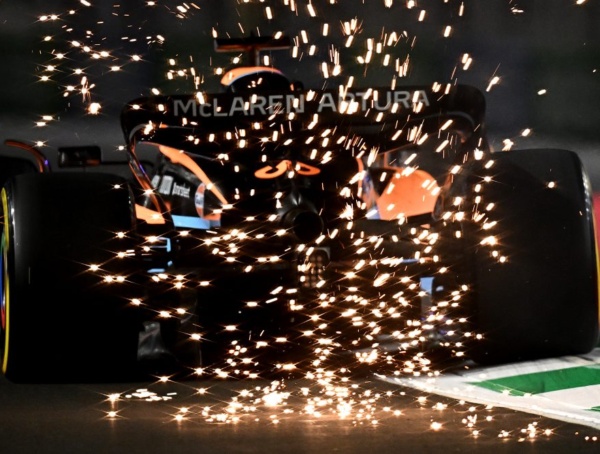
Ahead of the Bahrain pre-season test, McLaren removed a huge portion of the fluorescent papaya orange paint from their engine cover – using the bare carbon fibre area to promote their Artura road car before signing a sponsorship deal with Google. The space is now taken up by Android branding.
The Woking-based team also removed the light blue from the rear wing endplates and top of the cockpit – areas in which revisions like this aren’t too noticeable at first glance.
Aston Martin’s dark green livery at launch and in testing began to be scaled back in Barcelona with green being removed from the upper elements of the front wing. This has culminated in what we saw at the Australian Grand Prix where the AMR22 sported an entirely green-less front wing and rear wing and significantly smaller driver numbers.
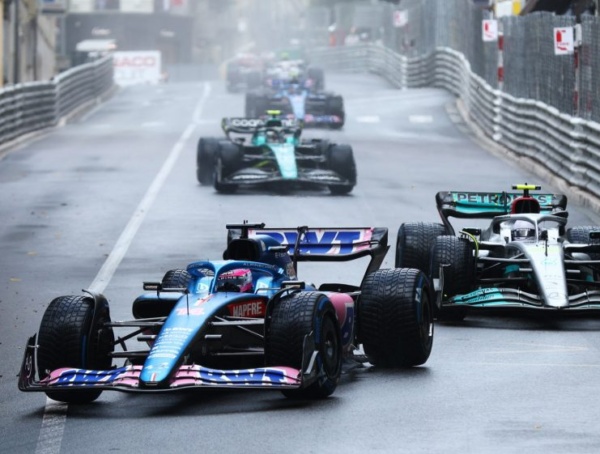
Red Bull removed dark blue paint from the lower, more obscure, wing elements after pre-season testing and Alpine has removed the pink from its rear wing endplates of each of its two different liveries used so far this year.
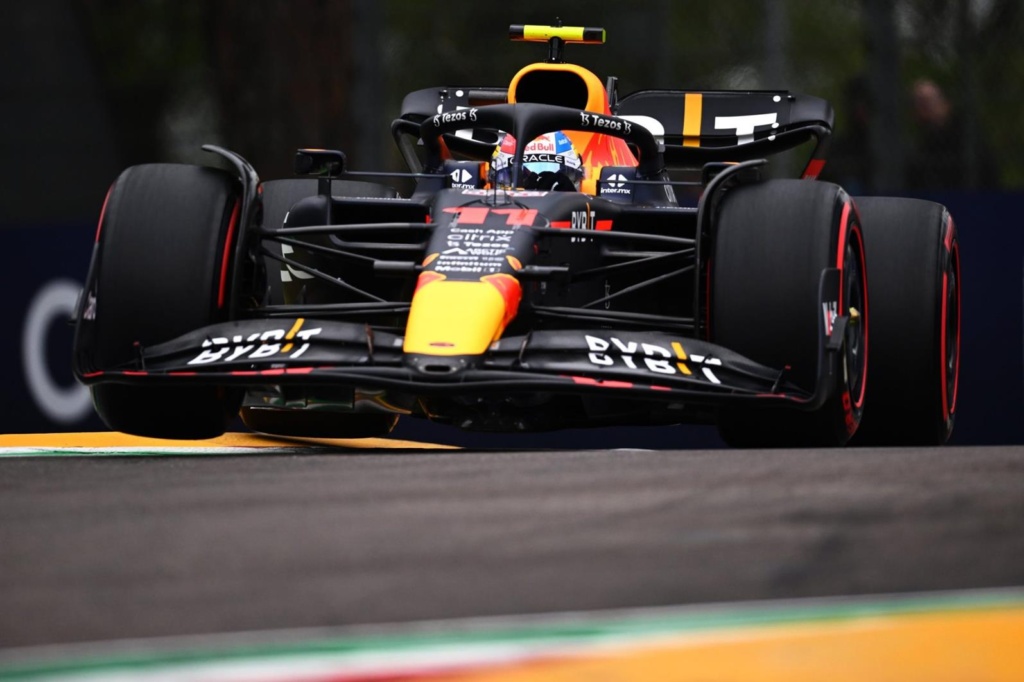
Image: Formula 1
Williams joins Aston Martin as committing to perhaps the most radical paint strip and redesign of all, by removing large areas of dark blue from the front wing, sidepods, airbox, engine cover and rear wing for Australia.
Now, at the Emilia Romagna Grand Prix, it has gone a step further by removing all of the paint from around the cockpit and airbox – effectively deleting an entire shade of blue from the livery.
The Grove-based team’s head of vehicle performance, Dave Robson, explained that it is quite a tough task to get near the weight limit this year.
“You’d always like the car to be lighter and I don’t know how obvious it is, but the paint scheme is different,” he said about the changes introduced in Melbourne.
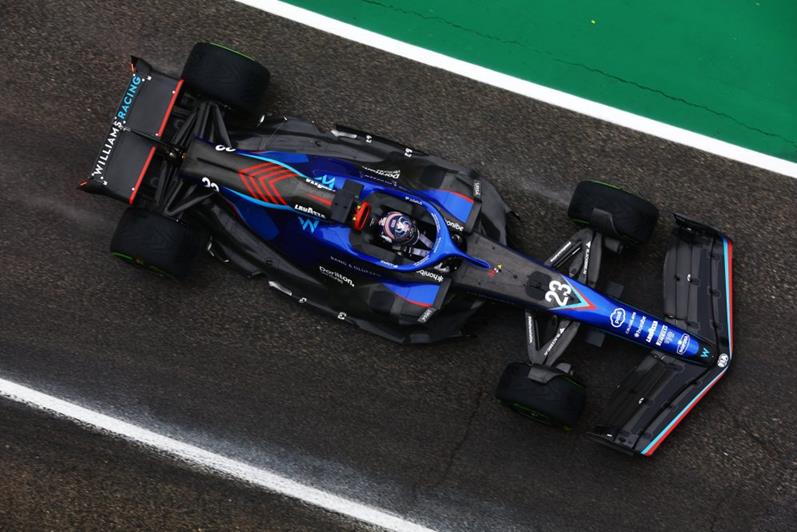
Image: Formula 1
“That is in part about lowering the weight of the paint on the car. I don’t know where we fit in the overweight category up and down pit lane, it’s very hard to know, but it is absolutely a challenge on these cars to get them below the weight. It’s something else we can continue to work on.”
What makes this time around so different for F1 teams in 2022 is that previously the target over the winter was to build the cars to be under the minimum weight limit, and therefore illegal, to therefore be able to add ballast to get to the limit – as ballast can be placed strategically to improve weight distribution.
The new cars for 2022 are a lot heavier than ever before however. As a consequence, the minimum weight increased from 752kg, in 2021, to a record 795kg before a push by several teams raised it to 798kg late on.
The only outfit that seems to have kept its weight beneath the limit is Alfa Romeo, requiring extra ballast to meet the minimum limit as is normally customary.
McLaren’s Team Principal Andreas Seidl went as far as confirming that “weight is a problem for all but one” – Alfa Romeo being the one.

Image: Formula 1
F1 cars tend to have a total of around 1.5kg (3.3lb) of paint applied (compared
to the 25-30kg (55-66lb) of a typical road car), although another source claimed it could be around 6kg. This is all to showcase the team’s own brand to the world, and that of their sponsors through the livery. Some paint schemes require a lot more paint than others, with some utilising different finishes.
For example, Red Bull switched to a fully matte design in 2016 as they felt the “shiny element” of their previous paint cost them a few hundred grams of weight. Ferrari followed suit in 2019 and so too did McLaren in 2020 and Alpine in 2021.
There’s no doubting that the teams have been clever in where they choose to remove paint, but it would be a fair assessment to suggest that those who happen to run darker liveries are more fortunate in this regard.
The loss of dark blue from certain elements of the Williams for example are barely noticeable when viewed from the front owing to the original design’s placement of colours.
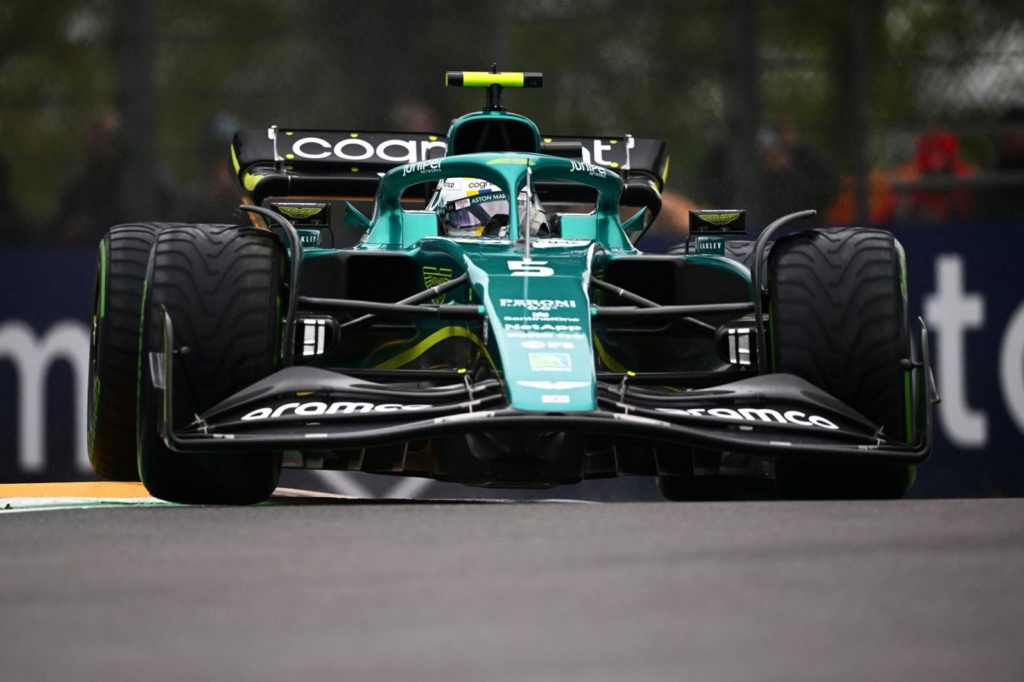
Image: Formula 1
It’s a balancing act of saving weight whilst trying not to upset sponsors or expose certain components to greater thermal degradation. Teams must also make sure the change in smoothness of the surfaces doesn’t impact the aerodynamic efficiency of the car.
Any small gain is worth it in Formula 1, especially when teams are working in as tightly restricted a regulation set as they are today whilst under a strict budget cap for good measure.
It’s great to see innovation, but efforts as arguably bovine as this should perhaps hint at an underlying quandary of the ruleset.
 Author: Danny Herbert

More from Danny Herbert
The Behind The Scenes Disagreement Between F1 Bosses In Canada
Formula 1 teams are entangled in yet another technical controversy which unsurprisingly reared its head on the Canadian Grand Prix …
Will F1’s Elder Statesmen Stick Around?
Age and experience brings wisdom and intuition, yet in Formula 1 it’s the young blood which is taking over the …
Analysis: Volkswagen’s current plans for Audi and Porsche F1 entry through McLaren and Red Bull
Volkswagen seems to have been edging closer and closer to a form of Formula 1 entry for what feels like …


