


Formula 1 teams are entangled in yet another technical controversy which unsurprisingly reared its head on the Canadian Grand Prix weekend after the FIA introduced a late directive which some argued favoured one team over others.
Late on Thursday, the FIA published a technical directive to “give guidance” to each team on how the organisation intends to tackle the bouncing issue which has befallen the current generation of F1 cars.
It included “closer scrutiny of the planks and skids” as the first bullet point, with the second point stating that they will introduce a “metric based on the car’s vertical acceleration, that will give a quantitative limit for acceptable level of vertical oscillations.”
These two points however were soon postponed indefinitely as it was realised that pinning down a precise value of a metric would not be possible in the time before the Montreal weekend.
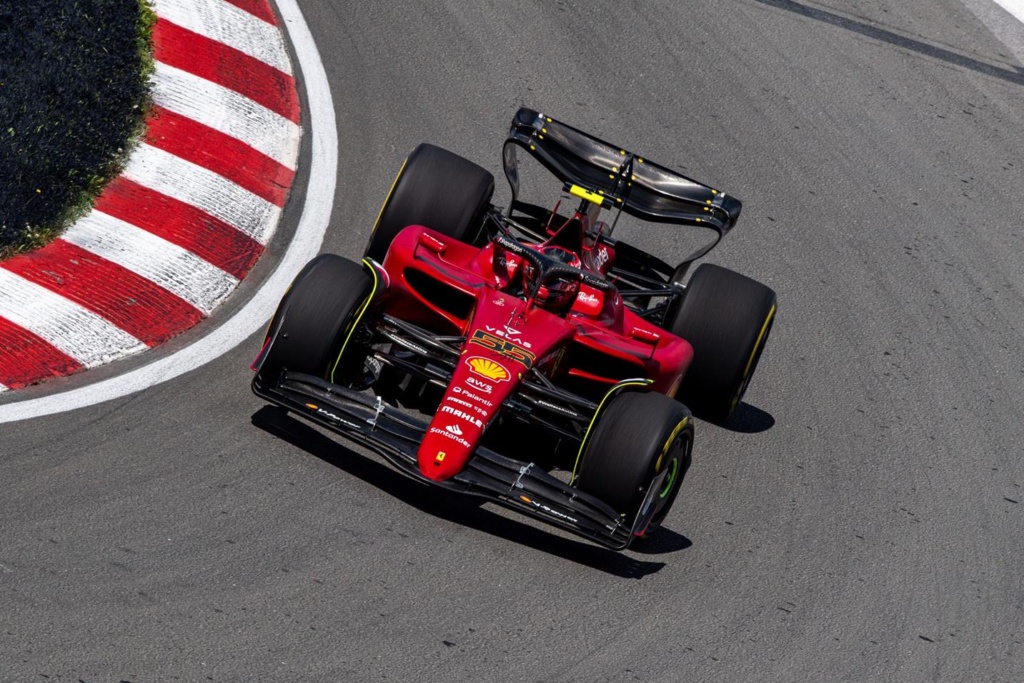
Image: Formula 1
Technical Directives can only be used for clarification purposes and can not be used to alter existing regulations or introduce new ones at short notice. Behind the scenes the way the FIA has gone about implementing a Technical Directive which some see as more than just a ‘Directive’ is yet another issue that sours F1’s relationship with the FIA.
“For us, that TD’s not applicable,” said Ferrari team principal Mattia Binotto. “And it’s something we mentioned to the FIA. A TD is there to clarify regulations, or to address policing. It is not there to change the regulations. That’s governance.”
What was more contentious though was something not stated in the publicly revealed directive – the allowance for a second floor stay to be fitted to stiffen the floor from Canada onwards. This element was not postponed. One floor stay per side was originally allowed from the start of the second pre-season test after calls to reduce the surprise onset of porpoising on most cars in testing.
The timing of the announcement ahead of Canada came too late for any team to design, produce and deliver a new stay and mounting points for the Friday practice sessions – except for Mercedes. The team that has been most vocal and appeared to suffer from the bouncing phenomenon most visibly had a second set of stays with them, fitted to George Russell’s car in FP1 and Lewis Hamilton’s in FP2.
Alpine boss Otmar Szafnauer and Red Bull team principal Christian Horner were the most vocal on this specific part of the controversy, implying that Mercedes must have got a form of heads up from the FIA that they would be able to run a second stay to help stiffen the floor before any of the other teams were notified.
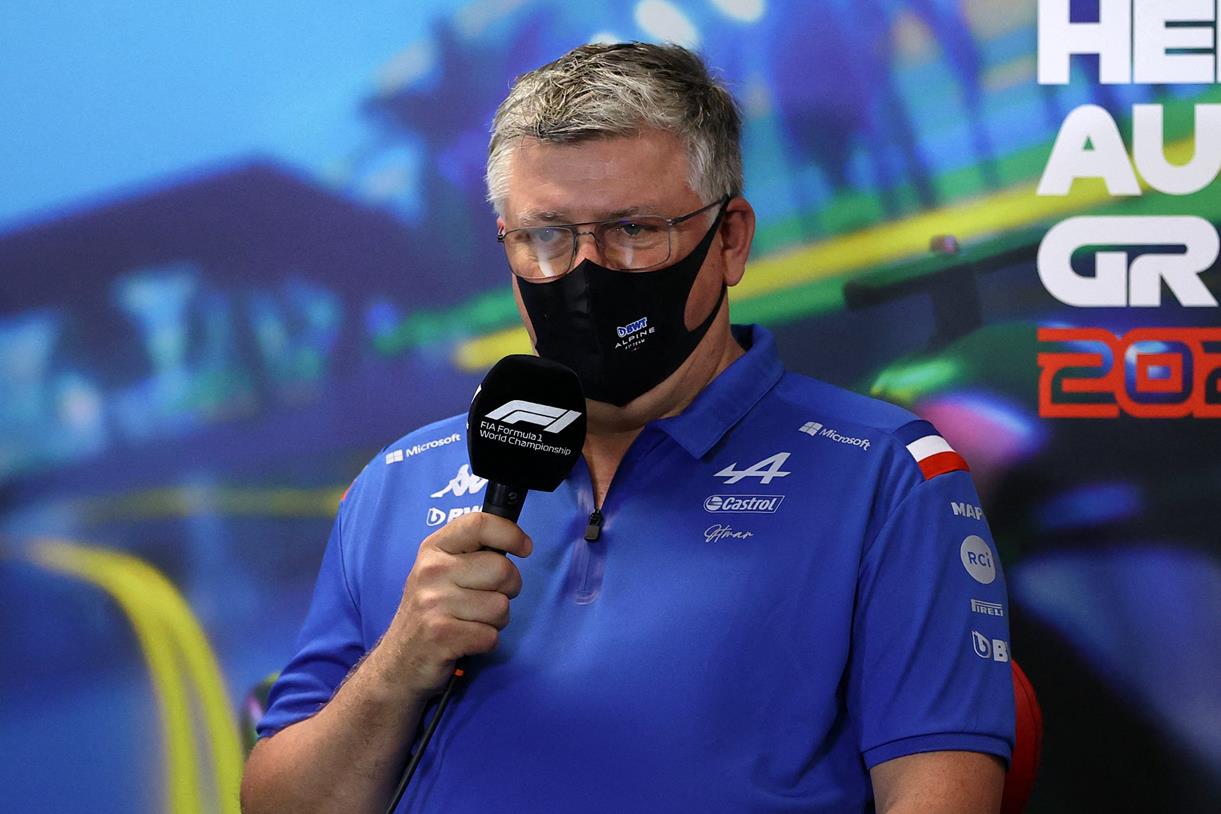
Image: Formula 1
“If you came here with a stay, we didn’t know because the TD came up on Thursday so we don’t have one, that just means you can stiffen the floor, run the car even lower and gain an aerodynamic advantage,” explained Szafnauer.
“So to be able to do that, I think that isn’t fair for the rest of us that couldn’t bring a stay, for example. We’ve got to be careful that we don’t change the playing field mid-season. I just say we can run these cars safely. Just raise the ride height.”
It seems that Mercedes however are actually running their car as high as they possibly can within the mechanical restraints of the suspension, so stiffening the floor to prevent flex whilst maintaining their current stationary ride height looks to be the route the team are exploring.
It appears ahead of the weekend in Canada that Alpine also decided to stiffen its floor before arriving at the circuit – therefore before the directive on floor stays was published – organically as it were which is thought to have detrimentally added weight to the car. Szafnauer suggests that if a team had run the secondary stay further into the weekend in Montreal, it may have resulted in a protest.
“It could very well be that we shouldn’t be running this in qualifying, in the race,” says Szafnauer. “If teams have brought those stays, I would imagine they could be perhaps looked at after and protested.”
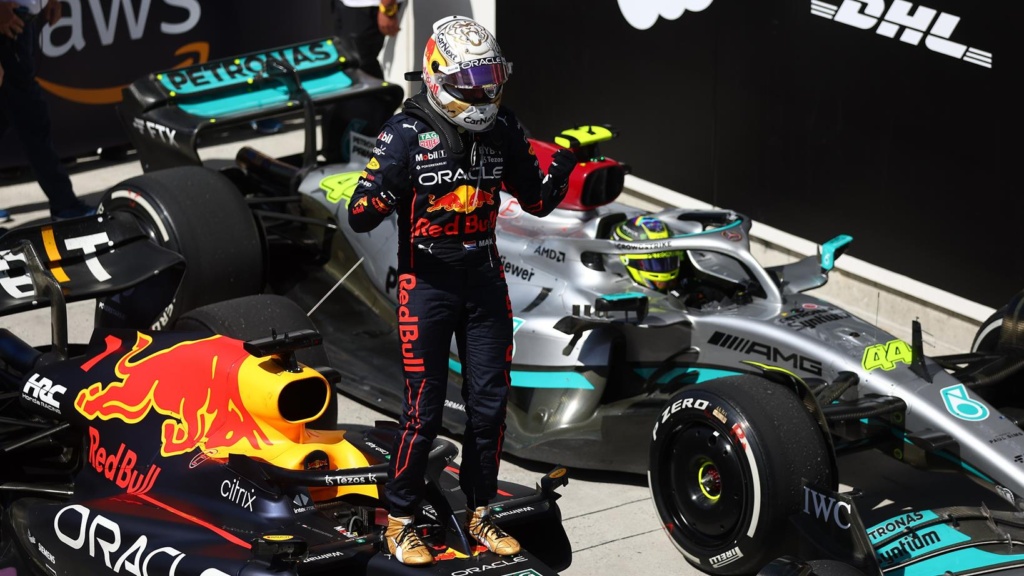
Image: Formula 1
Horner, team boss of the championship-leading Red Bull team, who so far look to have suffered the least porpoising and bouncing of any team, was equally miffed about the floor stay saga, commenting that it is simply an “overtly biased” directive towards Mercedes.
“What was particularly disappointing was the second stay because that has to be discussed in a technical forum,” said Horner. “And that is overtly biased to sorting one team’s problems out, which were the only team that turned up here with it even in advance of the TD. So, work that one out.”
“The issue with Mercedes is more severe than any other car,” he explains. “That surely is down to the team, that’s within their control to deal with that. It’s not affecting others – I know they’ve said that other drivers have been complaining, but our drivers have never complained ever about porpoising. Certainly, we haven’t had an issue with bouncing.”
The Wider Argument
The consensus of Mercedes’ closest rivals, be that Ferrari and Red Bull chiefly, is that of the obligation for teams affected by bouncing and bottoming out that they should sort the problem themselves – not potentially hinder those who suffer less from it with a new regulation which forces them to lose performance unfairly.
Horner feels that the issue of sorting the problem on safety grounds in this case is purely down to the impacted teams as, after all, he feels it is them who could have prevented the problem with a different car concept in the first place and it’s therefore down to them to sort it themselves.
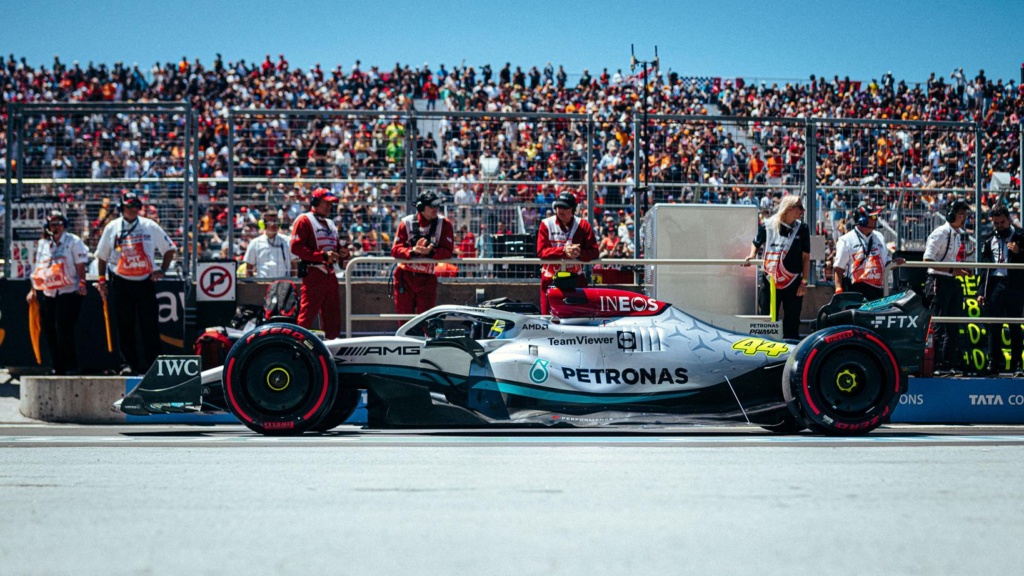
Image: Via: Mercedes-AMG PETRONAS Formula One Team
If the FIA was to do something as rudimentary as a mandated higher ride height for all cars, it could dramatically turn the title fight on its head by inadvertently disadvantaging some more than others – likely weakening those who don’t actually suffer from bouncing anyway.
He points to the FIA’s existing power to disqualify cars if necessary on safety grounds, although the ramifications of disqualifying a car instantly during a race-based purely on what the directive described as a “quantitative limit for an acceptable level of vertical oscillations” would clearly be contentious.
“You can’t just suddenly change technical regulations halfway through a season,” said Horner. “If a car is dangerous, a team shouldn’t field it. It has that choice, or the FIA if they feel an individual car is dangerous they always have a black flag at their disposal.”
Mercedes CEO and team principal Toto Wolff, who apparently displayed his displeasure in the teams’ briefing in Canada, is very unhappy about the supposed “manipulation” from rival team bosses which he describes as “just pitiful.” He also goes against Horner’s view that no Red Bull driver has ever complained about bouncing in the car, stating how “at least one” driver in each team has spoken of pain after the Azerbaijan Grand Prix.
“This is a sport where you’re trying to keep a competitive advantage or gain it, but this situation has clearly gone too far,” says Wolff. “All drivers, at least one in every team, have said that they were in pain after Baku, that they had difficulty in keeping the car on track, or blurred vision.
“And team principals trying to manipulate what is being said in order to keep the competitive advantage, and trying to play political games when the FIA tries to come up with a quick solution to at least put the cars in a better position, is disingenuous. That’s what I said.
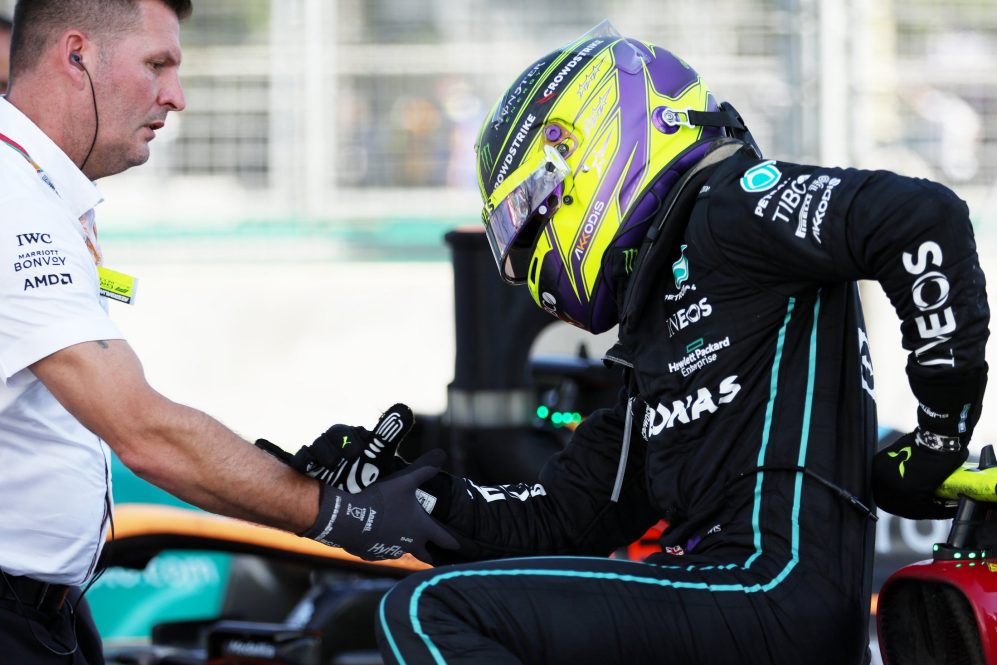
Image: Mercedes-AMG PETRONAS Formula One Team
“I’m not only talking about the Mercedes, all of the cars suffered in some way or other in Baku and still do here. The cars are too stiff, or the cars bounce, whatever you want to call it, because as a matter of fact, this is a joint problem we are having in Formula 1…
“It’s a fundamental design issue that needs to be solved. We have long-term effects that we can’t even judge. At any time this is a safety risk, and then coming up with little manipulations in the background or Chinese whispers or briefing the driver is just pitiful.”
Wolff and drivers Lewis Hamilton and George Russell, also a GPDA Director, are in a similar position of seeking to clarify their political position that they are not speaking solely for their own competitive advantage, as Wolff suggests others are choosing to do over drivers’ safety.
“Of course, people will question whether my position is sincere or not,” Wolff admitted. “That’s why I’m saying it’s not only our problem. This is not one team’s problem.”
“This is a design issue of ground effect-cars that needs to be tackled before we have a situation, whatever it is. And it is not just by putting the cars up [raising the ride height], because putting the cars up doesn’t solve the stiffness of the inherent aerodynamic characteristics.”
 Author: Danny Herbert

More from Danny Herbert
Will F1’s Elder Statesmen Stick Around?
Age and experience brings wisdom and intuition, yet in Formula 1 it’s the young blood which is taking over the …
Why Are F1 Teams Removing Paint From Their Cars?
Formula 1 teams are facing all-new technical challenges this season, with innovative solutions required to gain a competitive advantage over …
Analysis: Volkswagen’s current plans for Audi and Porsche F1 entry through McLaren and Red Bull
Volkswagen seems to have been edging closer and closer to a form of Formula 1 entry for what feels like …


