


The outside world is a rather troubled place these days and for the first time in a while is managing to encroach on things that were formerly somewhat immune to actuality.
The second-ever Saudi Arabian Grand Prix weekend, as a whole, felt like it was building towards an alarming crescendo, one in which anyone and everyone involved in the racing activity in Jeddah was surreptitiously crossing their fingers and praying to avoid.
Having arrived in Saudi Arabia under the dark cloud of alleged human rights issues in the country and violent attacks on facilities frighteningly close to the host city, the championship looked ahead to what was set to be an intriguing battle between the hotshots of Ferrari and Red Bull.
The key unknown going into Friday was the pace of Mercedes – were their Bahrain struggles a fluke or would they continue on the fast Jeddah street circuit?
In addition to the looming political uncertainties were the concerns over the safety of the Jeddah circuit itself, stemming back to the first event at the new circuit a few months ago. The blind nature of several high-speed points of the circuit, and the prevalence of unforgiving concrete barriers lining the track give little room for error – even with minor changes made for visibility purposes.
However Friday practice was ultimately marred by in all likelihood one of the most terrifying occurrences surrounding a race weekend in living memory, when it became clear that the dark cloud of smoke billowing from a nearby oil depot in FP1 was due to a missile strike.
Saudi Arabia has been part of a violent conflict with Yemen rebel group Houthi for around eight years, with an attack on the nearby Aramco oil facility leading to an urgent meeting between senior personnel, drivers and team principals.
The situation had become a distant problem to one directly on the championship’s doorstep, much like Formula E experienced a year ago when a hostile missile was reportedly intercepted above the circuit after the race.
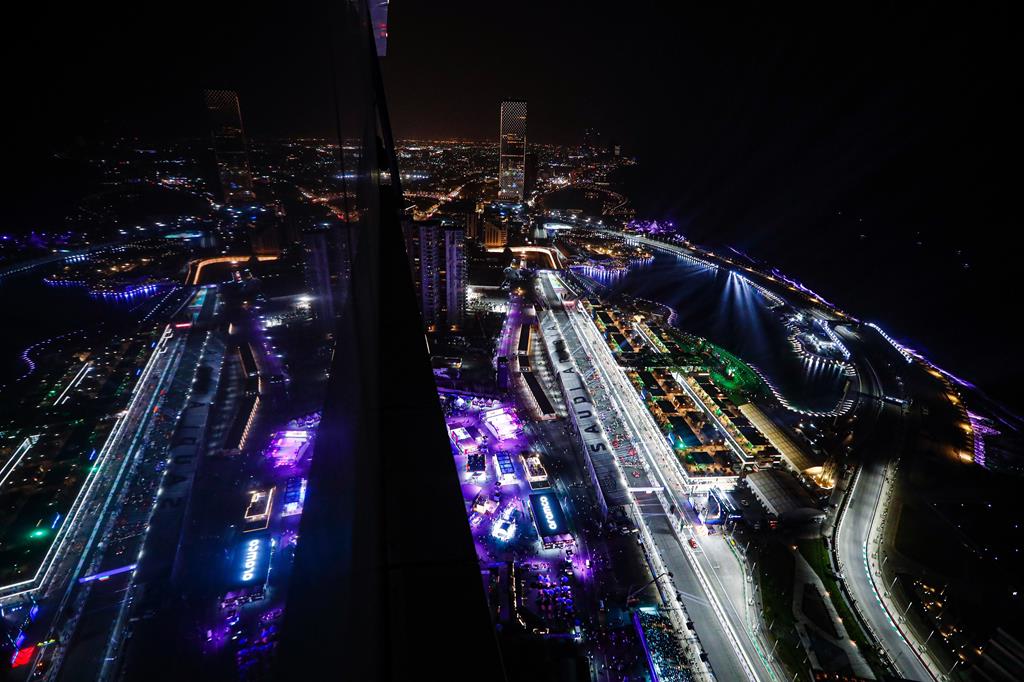
Image: Mercedes-AMG F1
F1’s meeting delayed the start of FP2 which eventually got underway 15 minutes late. In the wake of FP2, a second meeting in an F1 hospitality room soon developed into a Grand Prix Drivers’ Association (GPDA) meeting headed by GPDA Director George Russell. Those at the scene reported that the team principals were summoned back to the meeting at around 1:30am with the drivers apparently having decided to abandon the Grand Prix. Eventually the meeting dispersed but with Russell opting to tag along to an emergency team principals’ meeting.
Ultimately of course the race weekend continued with FP3, qualifying and the race transpiring without interference. A sizeable crash in qualifying for Mick Schumacher took over the headlines, and Sunday’s race was a quieter episode on the incident front, albeit for a couple of minor crashes, but did provide its fair share of wheel-to-wheel racing.
All involved in the earlier meetings were reportedly reassured as to the safety of the event from a military and political point of view with it being made clear the race was not a target, but with a promise made to re-evaluate the status of the event for future in the days afterwards.
F1’s bosses have since reportedly made it clear there will be no turning back on the deal to hold a Grand Prix there. Nevertheless it would surely be unrealistic to expect a permanent termination of the nation’s long-term deal with F1 anyway – instead expect assurances of security and rationality.
Perhaps fast-tracking the move to the all-new permanent Qiddiya complex, set to feature the most corners of any Formula 1 circuit, will be used to signify a new start for the Saudi Arabian slot on the calendar.
Ending up in these situations is something Formula 1 has seemingly walked into on too many occasions in recent years, and does inevitably come down to the obligation to find the funds for the championship’s spiralling costs. These eye-watering figures have tumbled down into almost every other form of motor racing, unfortunately sifting the good from the affluent and good.
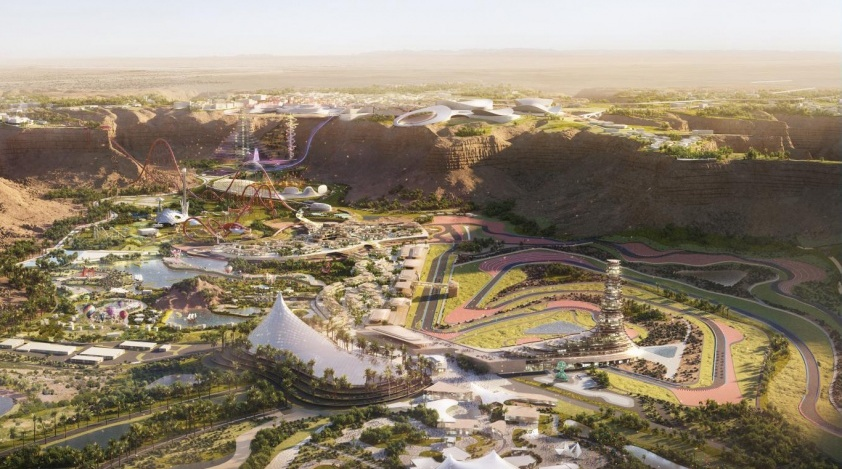
Image: Qiddiya
Enormous losses in 2020 thanks to the global pandemic only served to add to F1’s financial vulnerability and the challenges faced by up and coming talent looking to get into racing in whatever form.
In Formula 1’s case, the financial situation is improving and will continue to do so on the sporting front with the introduction of the long-needed cost cap and subtle performance levelling – which to an extent removes the incentive to mount up the spending. Therefore the championship which inescapably represents motorsport as an entity – it’s always been labelled the pinnacle after all – should, and I hope will set an example for the rest of the world to see.
Sport will always be political whether it likes it or not. Going ahead with the Grand Prix in Saudi Arabia puts a political focus on Formula 1 from the outside, but choosing to abandon racing also has political consequences. Either way, the championship, unfortunately, had backed itself into a corner by signing a 15-year deal with the nation without demanding critical change beforehand.
Speaking on behalf of the journalists, media personnel, circuit personnel, team personnel and the drivers, the fact is that this year’s race in Jeddah made most feel considerably uneasy. That shouldn’t be a feeling attributed to sport.
“I’m so happy that the weekend’s done and also just so happy that everyone’s safe and I’m looking forward to getting out,” said seven-time champion Lewis Hamilton after the race.
“I don’t have anything [else to add], I just want to go home.”
 Author: Danny Herbert

More from Danny Herbert
The Behind The Scenes Disagreement Between F1 Bosses In Canada
Formula 1 teams are entangled in yet another technical controversy which unsurprisingly reared its head on the Canadian Grand Prix …
Will F1’s Elder Statesmen Stick Around?
Age and experience brings wisdom and intuition, yet in Formula 1 it’s the young blood which is taking over the …
Why Are F1 Teams Removing Paint From Their Cars?
Formula 1 teams are facing all-new technical challenges this season, with innovative solutions required to gain a competitive advantage over …


