


Oracle Red Bull Racing’s Team Principal Christian Horner freely admitted during the team’s launch show, hosted by Tim Warwood and Adam Gendle, that the version of the RB18 on display “is not going to look very much like” the car which the team fields at the first race.
Reigning world drivers’ champion Max Verstappen, and two-time race winner Sergio Perez were also present at the event which not only revealed a car, but a lucrative title sponsorship deal with computer technology and software company Oracle too.
“I think by the time we get to the first race the car is not going to look very much like this, and I think the evolution will be very, very quick, as we progress through the season,” said Horner.

Image: Oracle Red Bull Racing
“We believe we have a good car for 2022, the RB18 is coming to life and seeing it today is fantastic.”
However the version of the RB18 on show today is not only subject to change, but it’s also very alike to one of Formula 1’s own showcars presented all the way back in 2019, when the new technical ruleset was originally intended for 2021 before the pandemic delayed its introduction by a season.
The gently tapered nose shape is the most distinctively similar feature to the mule car, alongside a front wing made up of three elements. And its the latter factor which confirms that this iteration of the RB18 can not even be close to the real thing.
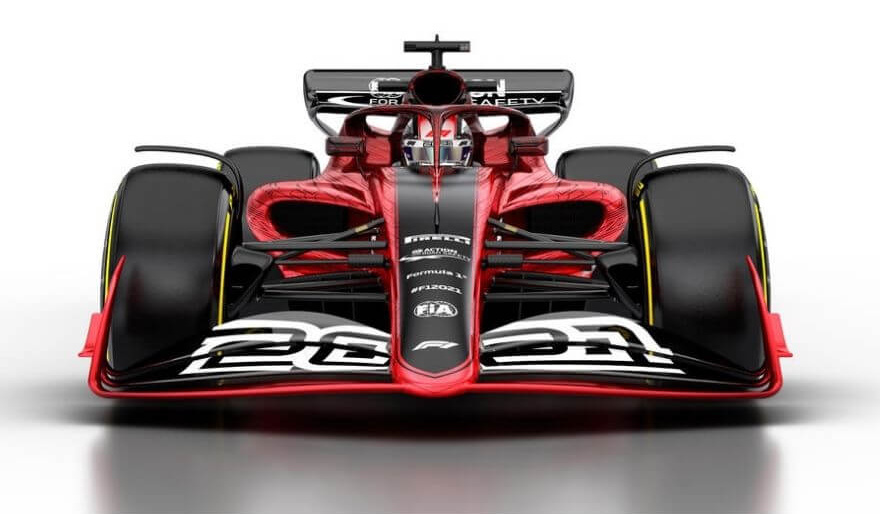 Image: Formula 1
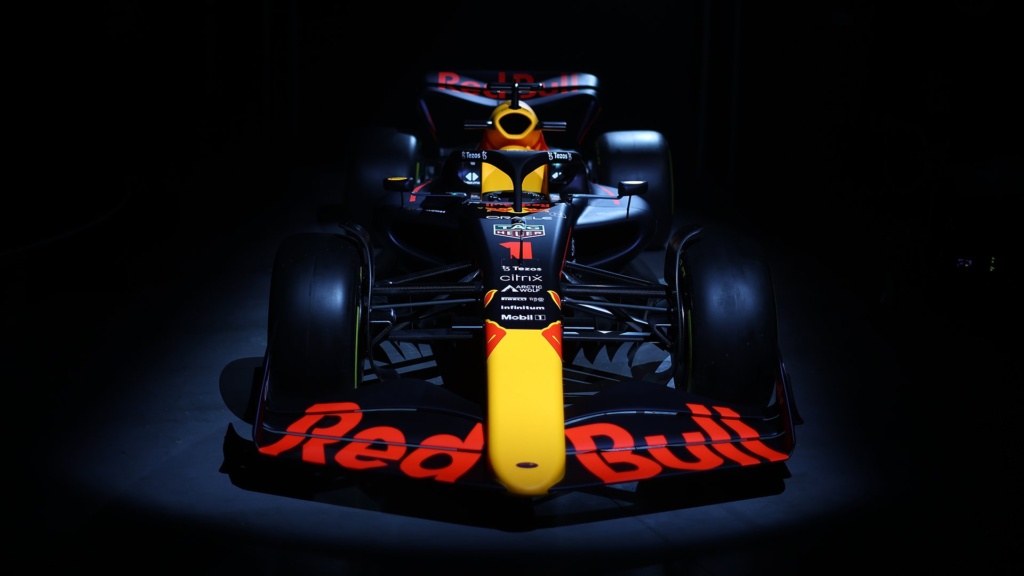
Image: Oracle Red Bull Racing
The final addition of the 2022 regulations states that front wings must consist of no less and no more than four elements, making the Red Bull wing illegal if it were to be under homologation.
This area is so especially prescribed as the all-new-for-2022 front wings are crucial to achieving the goal of reducing the turbulent wake from the cars, and therefore improving the chances of being able to follow others more closely and potentially pulling off an overtake.
As prescribed by the regulations, the gap between the nose and the inner edge of the wing elements has been removed entirely, as one of F1’s key philosophies to decrease the ‘dirty air’ produced was to abolish the Y250 vortex – hugely disruptive vortices which accelerated the airflow outboard, as it passed the wheels, taking with it the turbulent air created by the spinning motion of the wheels and tyres.
Instead, the elements now attach directly to the nose itself.
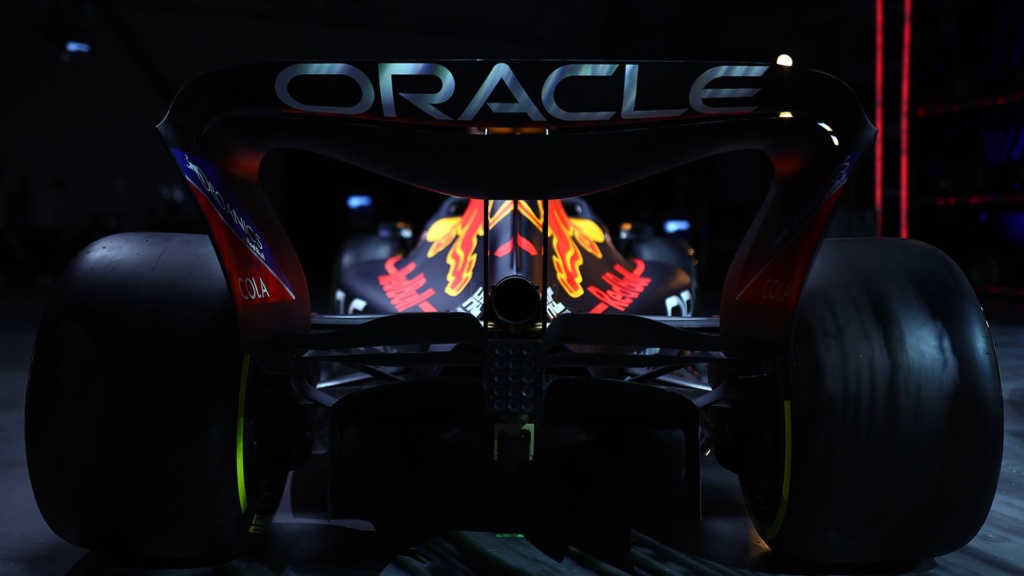
Image: Oracle Red Bull Racing
Even though the lighting in the official photos released by Red Bull has done its best to disguise certain parts of the car, it’s clear the launch car doesn’t feature any form of DRS actuator, and that the usual Red Bull ‘size-zero’ wrap-around bodywork around the sidepods and coke-bottle area is not at all present or correct.
The mandated engine cover louvre openings seen on the most recent Formula 1 show cars are also nowhere to be seen, but interestingly weren’t present on Haas’s launch car either.
Apart from this, there’s certainly an absence of noteworthy aerodynamic trickery being exhibited here. Coming off the back of the team’s most successful season in the hybrid era of Formula 1, and under the guidance of technical genius Adrian Newey, Red Bull are keeping as many of their prospective aerodynamic secrets under wraps for just a little bit longer.
This car is clearly not the ‘real’ RB18, leaving the rudimentary VF-22 concept which Haas unveiled last week as our strongest indicator of the true state of the new rules.
 Author: Danny Herbert

More from Danny Herbert
The Behind The Scenes Disagreement Between F1 Bosses In Canada
Formula 1 teams are entangled in yet another technical controversy which unsurprisingly reared its head on the Canadian Grand Prix …
Will F1’s Elder Statesmen Stick Around?
Age and experience brings wisdom and intuition, yet in Formula 1 it’s the young blood which is taking over the …
Why Are F1 Teams Removing Paint From Their Cars?
Formula 1 teams are facing all-new technical challenges this season, with innovative solutions required to gain a competitive advantage over …


